
Who We Are
We are an interdisciplinary community of scholars, practitioners, advocates, and students interested in the application of critical, scientific, and humanistic perspectives to the study of vital social problems.
We are an interdisciplinary community of scholars, practitioners, advocates, and students interested in the application of critical, scientific, and humanistic perspectives to the study of vital social problems.
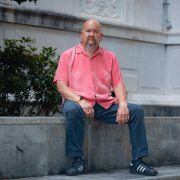 Like others, I was introduced to SSSP as a graduate student by mentors that I hold in very high esteem. In my case it was Woody Doane and Eduardo Bonilla-Silva. Both knew I was looking for something more than superficial mainstream professional organizations. Sure, SSSP has its shortcomings. However, I truly believe it to be capable of so much more. At a time when social science research, higher education, and sociology itself face unprecedented political, economic, and cultural pressures, we need spaces that sustain both rigorous scholarship and collective courage.
This moment also calls for honesty. Perhaps sociology, at least as we have come to practice and imagine it, is not enough. Rather than asking how we might reform sociology, we should be willing to rethink it altogether. What assumptions have we inherited? Whose knowledge have we centered? What possibilities have we overlooked? SSSP can be the space that creates the conditions for asking these difficult questions while embracing diverse ways of knowing, researching, and engaging with communities beyond the academy.
Some folx have called us (SSSP) radical scholars or dismissed challenges to existing systems of oppression as too radical. Radical is nothing more than an unimaginative label applied by defenders of the status quo to folx who refuse to accept unnecessary inequality and injustice. There is nothing radical about believing that another world is possible, or about working to make that world more just, inclusive, and humane. In this critical moment, SSSP reminds us that scholarship is strongest when it is rooted in community, open to transformation, and committed to building a future where everyone belongs.
David G. Embrick, University of Connecticut, SSSP President, 2026-2027
Five years ago, the Board of Directors voted to conduct a membership survey every five years to assess how well the SSSP was meeting the needs of its members. Click here to view the cover letter written by Dr. Héctor L. Delgado, Executive Officer. Click here to view the results of the most recent survey. Please feel free to contact Dr. Delgado directly should you have any questions or concerns, hector.delgado49@gmail.com. If your concerns require anonymity or confidentiality, he is happy to provide both.
Resolutions constitute an important opportunity for our scholar-activist membership to analyze and offer their opinions on contemporary social problems that we believe the Society should address as a social justice organization. All SSSP members are invited to review the approved 2021 resolutions and participate in the resolutions process.
Click here to view the 2021 Approved Resolutions.
 The Society for the Study of Social Problems wishes to join millions of Americans, especially communities of color, in condemning the murder of George Floyd by four police officers, sworn to serve and protect the citizens of this country. The impunity with which these officers took Mr. Floyd’s life serves as a reminder that we are all complicit if we do not do everything in our power to end the systematic oppression of people of color in the United States. What we witnessed was, for all intents and purposes, a lynching on national television. This incident, along with the recent murders of Breonna Taylor and Ahmaud Aubrey in separate incidents, adds evidence to the long and intertwined histories of state-sanctioned murder of black Americans, systemic racism against all people of color, and white supremacy. These systemic injustices are particularly tragic as they occur at a time when communities of color are disproportionately experiencing death and disease from the COVID-19 pandemic. We would be remiss as well not to express concern about the threat of using the armed forces of the United States against citizens of the United States on their own soil and by their own military. The overwhelming majority of protesters, from every ethnic and racial group, have engaged in peaceful protest and acts of civil disobedience, even in the face of excessive force by the police. Protesters are not the enemy. The enemy is racism, and we all have a responsibility to root it out wherever it is embedded.

The Society for the Study of Social Problems | 901 McClung Tower, University of Tennessee | Knoxville, TN 37996-0490
E-mail: sssp@utk.edu | Phone: 865-689-1531 | Fax: 865-689-1534
Copyright © The Society for the Study of Social Problems, SSSP, www.sssp1.org.
All rights reserved.